
Introduction
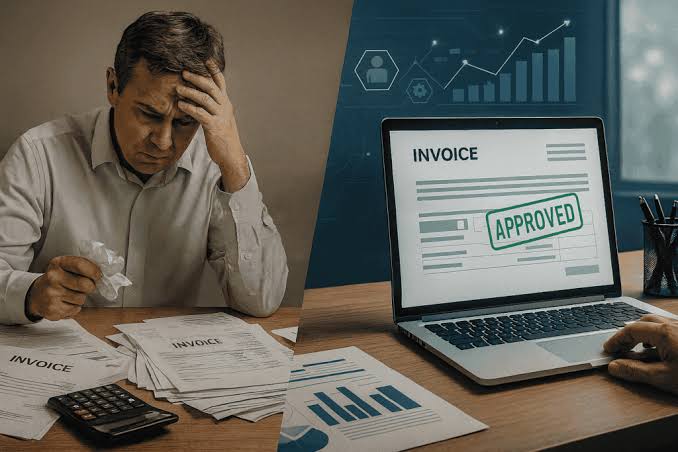
As businesses expand, invoice processing becomes more challenging. A growing number of suppliers, customers, and transactions can make it difficult for finance teams to maintain accurate records and process payments efficiently. Without a streamlined invoice management system, businesses may experience delayed payments, cash flow problems, and unnecessary administrative work.
Invoice processing involves receiving invoices, verifying information, recording transactions, obtaining approvals, and completing payments. As transaction volumes increase, businesses need effective processes to manage invoices accurately and efficiently.
Managing High Volumes of Invoices
Growing businesses often receive hundreds or thousands of invoices from different suppliers. Managing this increasing workload manually can slow down financial operations and create unnecessary pressure on accounting teams.
1. Challenges:
Common challenges include:
Manual data entry requirements:
Entering invoice details individually takes significant time and increases the possibility of mistakes.
Difficulty organizing invoices:
Businesses may struggle to locate specific invoices when records are stored across emails, spreadsheets, and different systems.
Delayed invoice processing:
A high volume of invoices can create backlogs, leading to late approvals and payments.
2. Solution:
Businesses can use automated invoice processing tools to capture invoice information, organize documents, and speed up approval work-flows.
Reducing Invoice Data Entry Errors
Accuracy is essential when managing financial records. Even minor mistakes in invoice details can affect payments, reporting, and supplier relationships.
1. Challenges:
Common issues include:
Incorrect payment amounts:
Errors while entering invoice values can result in over-payments or underpayments.
Duplicate invoice entries:
Repeated data entry may cause businesses to pay the same invoice more than once.
Missing information:
Incomplete supplier details or invoice references can delay payment processing.
2. Solution:
Automated data extraction and validation tools can reduce manual errors by accurately capturing invoice details and checking information before approval.
Improving Invoice Approval Processes
Approval delays are a major challenge for growing businesses. When invoices require approval from multiple people, they may remain pending for extended periods.
1. Challenges:
Problems caused by inefficient approvals include:
Payment delays:
Slow approvals can result in missed payment deadlines and late fees.
Limited visibility:
Finance teams may not know where an invoice is in the approval process.
Poor accountability:
Without clear responsibilities, invoices may be overlooked.
2. Solution:
Businesses should create structured approval work-flows with automated reminders, clear approval limits, and defined responsibilities.
Maintaining Better Invoice Tracking
As businesses grow, tracking invoice status becomes more complicated. Finance teams need visibility into which invoices are pending, approved, paid, or overdue.
1. Challenges:
Important invoice tracking requirements include:
Monitoring outstanding invoices:
Helps businesses manage unpaid invoices and improve cash flow forecasting.
Identifying payment delays:
Allows teams to address issues before they affect supplier relationships.
2. Solution:
A centralized invoice management system provides real-time updates and improves visibility across financial operations.
Integrating Invoice Processing with Accounting Systems
Many businesses use separate platforms for invoicing, payments, and accounting. Poor integration can create extra work and inconsistent records.
1. Challenges:
Common challenges include:
Repeated data entry:
Employees may need to enter the same information into multiple systems.
Data inconsistencies:
Different platforms may show conflicting financial information.
2. Solution:
Integrating invoice processing software with accounting platforms helps automate data flow and improves financial accuracy.
Conclusion
By adopting automation, improving work-flows, and integrating accounting systems, businesses can create a smoother invoice processing process. A well-managed invoice system helps save time, reduce errors, strengthen supplier relationships, and support sustainable growth.